Fulfilling Achievement vs Fulfilling the Soul
Exploring the balance between achievement-seeking and soul-nurturing, and prioritizing communion with God over working for God. Reflections from a men's staff retreat on living an integrated, spiritually healthy life.
Part One
”Fulfilling Achievement” VS “Fulfilling the Soul"
"Working for God” VS “Communing with God”
Source Materials
魂のサバイバルガイド 達成志向の世界で霊性を養う』 (いのちのことば社) 2020/10/30 ケン・シゲマツ (著), 重松 早基子 (翻訳)
(Original English title: Soul Survival Guide: Nourishing Your Spiritual Life in a Achievement-Oriented World) by Ken Shigematsu, translated by Sakiko Shigematsu Published by Word of Life Press, October 30, 2020
『新・情緒的に健康な教会をめざして 魂の変容をもたらす弟子づくり』 (いのちのことば社) 2025/5/20 ピーター・スキャゼロ (著), 鈴木茂、鈴木敦子 (翻訳)
(Original English title: The Emotionally Healthy Church: Soul Transformation Through Discipleship) by Peter Scazzero, translated by Shigeru Suzuki and Atsuko Suzuki Published by Word of Life Press, May 20, 2025
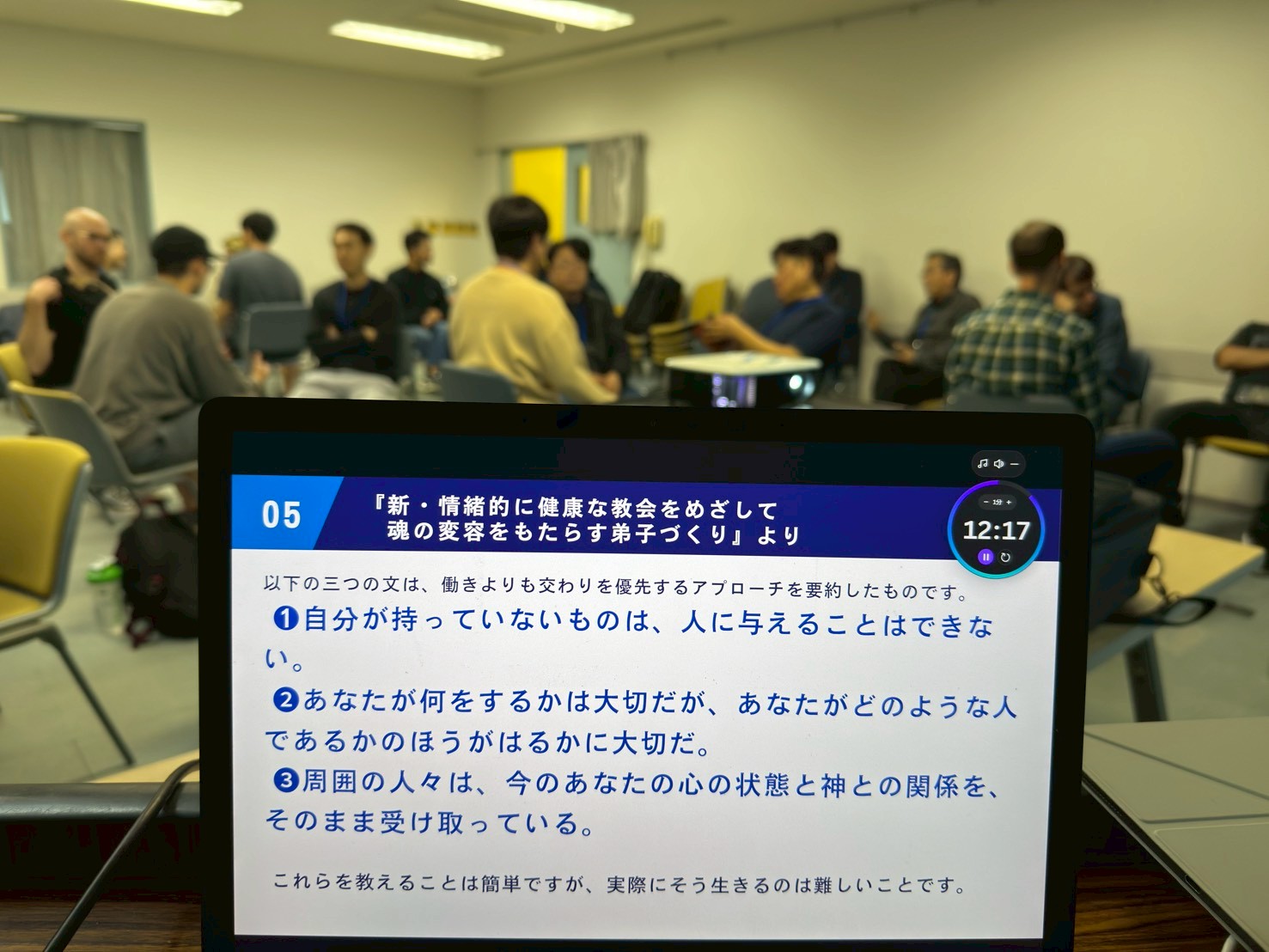
I just returned from our staff men’s retreat this past week. It happened right on the heels of our national SLM (Student-Led Movements aka campus ministry) staff conference. Apart from gaining a moderately rolled out ankle (ouch! never attempt to play basketball with average cheap indoor-use sneakers), I had a wonderful time. During part of the retreat, we explored the theme of balancing “fulfilling achievement” and “fulfilling the soul,” as well as prioritizing “working for God” over “communing with God.” The materials were drawn from two insightful books: Soul Survival Guide by Ken Shigematsu and The Emotionally Healthy Church by Peter Scazzero.
Interestingly, Ken Shigematsu who is now senior pastor of Tenth Church in Vancouver, Canada, was born in Tokyo, Japan where I am working right now. Apparently, before entering church ministry, he worked for Sony Corporation in Tokyo, where he prepared employees for work in North America and Europem, and is known for his unique leadership philosophy that blends Eastern and Western traditions. (On another serendipitous note, I discovered that the book is currently on sale at a low price of $1.99 on Kindle in the US Amazon store!)
The other book’s author, Peter Scazzero, is the founder of New Life Fellowship Church in Queens, New York. He is renowned for pioneering the concept of emotionally healthy spirituality and has been a significant influence on many Christian leaders worldwide. I was first introduced to his work Emotionally Healthy Spirituality more than a decade among, and it has significantly shaped my approach to work and personal life.
The discussions and my subsequent reflection on them were so enriching that I wanted to share some of the key points from the materials we covered. Below are summaries of selected chapters from both books that we studied during the retreat.
There is also a fun quiz at the end to test your understanding of the concepts presented!
From “Soul Survival Guide”
Chapter 1: The Divided Self
“For I do not do what I want, but I do the very thing I hate.” — the Apostle Paul (Romans 7:15)
People often say “be true to yourself.” But honestly, many selves exist within us. There is no neatly integrated self. Sometimes it feels like various voices in our hearts compete and present opposing opinions. This isn’t necessarily a bad thing. The Bible teaches that we are complex beings with multiple facets, possessing various motivations and desires.
Jewish teacher Joseph Soloveitchik, in his book The Lonely Man of Faith, pointed out that Genesis depicts two different aspects of Adam. He says Adam’s duality represents different essentials of human nature. He simply calls them Adam I and Adam II.
Adam I and Adam II
According to Soloveitchik, Genesis 1 introduces Adam I. This Adam follows God’s command to “fill the earth and subdue it” (v. 28). His purpose is to conquer, create, and dominate. In modern terms, Adam I wants to understand how the natural world works to overcome disease, create prosperous businesses, and dominate this world. This Adam feels responsibility and pressure to create something and succeed. Soloveitchik points out that this Adam’s calling is good and necessary. A healthy Adam I element is needed to accomplish something in this world.
Soloveitchik then explains Adam II from Genesis 2. In contrast to Adam I who wants to conquer, create, and dominate, Adam II is led to a garden. He is called to serve there humbly (v. 15). The two Adams had different desires. While Adam I had a desire to create something, Adam II seeks relationships. He seeks connection with the Creator and felt loneliness until Eve appeared. Adam II was more interested in why nature exists in the first place than in knowing how the natural world works. He seeks meaning in life.
Soloveitchik believed that these two aspects of Adam represent truth applicable to all humans. In other words, we too have these two different personalities. While we pursue success in one aspect (Adam I), in another aspect we seek connection with God and people (Adam II). Furthermore, these two personalities don’t necessarily oppose each other. All of us need some degree of Adam I motivation and ambition to take action. Whether that’s disposing of junk, learning new skills for work, or starting a ministry that brings God’s justice. On the other hand, we also need Adam II tendencies that seek relationships, spiritual connection, and meaning in life. Healthy people can balance these two, complementing each other in a life-giving holistic way.
What about you? Put your name in the parentheses: () I and () II.
What is the state of these two tendencies within your heart?
How does your desire for success affect your life and relationships? Which tendency do you lean toward? Or do they work together complementing each other?
Nevertheless, using Roman numerals after your own name feels unnatural. From now on, while using Soloveitchik’s concept of the dual nature of self, I want to use different terms to further explore this duality. Within us, there is an aspect that wants to influence the world around us through our own efforts and achievements. In another aspect, we seek soul connection through relationships with people and experiences with God. In the following chapters, I will call these two aspects within us “Achievement-Seeking Adam” and “Soul-Seeking Adam.”
Regardless of your tendencies, today’s competitive Western nations cultivate and praise the “Achievement-Seeking Adam.” Even when Soloveitchik first presented this concept in 1965, he said that in modern Western society, “Achievement-Seeking Adam” overshadows “Soul-Seeking Adam.” The desire to conquer, create, and dominate constantly exceeds the desire for deep relationships with people and intimacy with the Creator.
More than fifty years after Soloveitchik first noticed this reality, we have come to place even more value on “Achievement-Seeking Adam.” The innate desire we have to succeed continues to overwhelm our longing for meaningful connections. Today, people find it difficult to discover a healthy, orderly way of life and relationships.
Workplace Pressures
Steve Jobs, who brought many innovative contributions to the world through Apple products, is a good example of when “Achievement-Seeking Adam” completely sidelines “Soul-Seeking Adam.” According to Walter Isaacson, who wrote Jobs’s biography, Jobs was so preoccupied with developing new products and succeeding that he forgot not only his wedding anniversary but even his wife’s and children’s birthdays. While we appreciate the wonderful products that the “Achievement-Seeking Adam” within him sent into the world, it’s clear that Jobs’s desire to create completely overshadowed the “Soul-Seeking Adam” within him.
When Apple was going through its IPO process, Jobs refused to give stock options even to his closest co-founders. He could only see the world through winning and losing—in other words, a “winner takes all” theory. In a 2015 movie based on his authorized biography, Apple co-founder Steve Wozniak speaks to Jobs: “Your products are better than you are.”
“That’s the point,” Jobs replies.
Wozniak doesn’t end the conversation there but counters Jobs: “Life isn’t binary. You can have exceptional talent and still be a decent person.” However, that’s not easy. “Achievement-Seeking Adam” feels passion about creating great products. “Soul-Seeking Adam” feels passion about becoming a great person with God’s help. And as Wozniak acknowledges, these two aren’t mutually exclusive. Some people can do their work well and still be good people. We need to find a balance between the ambition of “Achievement-Seeking Adam” and the thirst of “Soul-Seeking Adam.”
One reason we end up prioritizing “Achievement-Seeking Adam” is the misconception that we can overcome feelings of inferiority by achieving results. Many people mistakenly believe that if they achieve their goals, their emptiness will be filled and they’ll be happy. In fact, psychologists point out that our brains have a tendency to incorrectly predict what will make us happy.
We predict that if we achieve a certain goal in life, we will be happy.
If I can get into a good school, I’ll be happy. If I can have the ideal house, I’ll be happy.
According to Harvard psychology professor Shawn Achor, this “if… then…” logic doesn’t hold up scientifically. That’s because every time our brain experiences “success,” it sets up what it considers to be the next successful goal. If you get good grades, then you need to get even better grades. If you get a good job, then you try to get an even better job. If you meet your sales target, you need an even higher goal. If you buy a house, then you want a bigger house.
Every time you achieve a goal, dopamine is released in your brain. It gives you pleasure, but it’s temporary. After experiencing a moment of excitement, we find a new mountain on the horizon and begin to climb it. Both Christianity and Eastern religions teach that while joy from money, possessions, or achieved success brings happiness, it remains at a very basic level. To experience a higher dimension, more meaningful, and lasting happiness, something else is needed. That happiness comes from generativity (translator’s note: generativity is a term coined by psychologist Erik Erikson referring to the ability to contribute not just to oneself but to the next generation). In other words, true happiness is obtained by surrendering yourself to unconditional and infinite love and bringing abundant life and happiness to other people.
Those who have encountered God’s love are given the privilege of living as healthy, joyful people. When we accept unconditional and infinite love, we are freed from pursuing worldly success, and our sense of contentment and happiness increases. When filled with the Spirit of love, we come to share life with people, and our sense of happiness deepens. Of course, happiness is not only the purpose of life, but when we offer ourselves to God and live experiencing this joy of life in this world, rather than feeling like we’re sacrificing ourselves, we feel like we can actually accomplish more work.
Shortly after I came to Tenth Church, I was anxious for the situation to improve quickly. I was working about seventy hours a week, but those efforts were not rewarded. I achieved only minimal growth, and the end seemed near. However, when I reduced my working hours after getting married, something surprising happened. Despite working fewer hours than before, the ministry bore more fruit. The church became healthier. Then seven years later I became a parent and reduced my working hours even more. While my family life became richer, I saw the church grow as well.
What made the difference? While shortening my working hours, I began actively incorporating several spiritual practices—meditation and prayers of gratitude, among others—which helped me deepen my connection with God and empathize with my family and the people around me. As a result, my work also went well. As the workday approached its end, I was sometimes tempted to stay at the office a little longer to reply to a few more emails. However, I learned over time that the small sacrifices I make in daily life become investments in other areas and lead to fruitful balance. Achievement-seeking Ken and soul-seeking Ken began to work in harmony with each other.
In the following chapters, I want to introduce not only historically famous people like Augustine and Dorothy Day, but also contemporary Christians who cultivated a joyful, abundant life with God and accomplished meaningful great works in this world. They too faced pressure for success. However, their lives teach us that it is possible to live with an integrated, beautiful soul even in this divided world.
Reflection and Discussion Questions
-
Do you naturally have “Achievement-Seeking Adam” tendencies? Or “Soul-Seeking Adam” tendencies? Are there examples from your life that demonstrate this?
-
Do you have a desire to be recognized through education, work, relationships, appearance, or other things?
-
Do you know someone who successfully integrates both “Achievement-Seeking Adam” and “Soul-Seeking Adam” in their life? What kind of person are they?
-
What do you think is the difference between achievement and fruitfulness?
-
How does contentment lead to greater fruitfulness?
From “The Emotionally Healthy Church”
Chapter 3: Prioritizing Being with God Over Doing for God
Most people who follow Jesus are constantly overextended, doing more than their current communion with Jesus can sustain. With too much to do and not enough time, when asked to do something or offered an opportunity, they say “yes” as a matter of course without carefully discerning God’s will. Being overburdened and depleted has become “normal” for them. The concept of “leisurely-paced spirituality” or “leisurely-paced discipleship”—working for Jesus from a place filled by communion with Jesus—seems unfamiliar. What does such spirituality actually look like in daily life? What’s the difference between a “work-first leader” and a “communion-first leader”? To explain this difference, it’s best to look at a morning in the life of a leader named Carlos.
Carlos: Work-First Leader
Carlos gets up at 6:30, showers, gets ready, prays briefly to God, reads the Bible, then wakes his 10 and 7-year-old sons. Last night he had a meeting with the accountant to adjust next year’s church budget and couldn’t eat with his family. Moreover, the small group leader training ended an hour later than scheduled, so by the time he got home, his family was already asleep.
He was aware it must have been a busy night for his wife Sophia. Cooking, cleaning up, helping with homework, and putting the kids to bed is overwhelming even when he’s home.
Feeling guilty, Carlos tried to give his full attention to his parental duties that morning. “Sophia will appreciate it,” he told himself. “Maybe it will make up for being late last night.” However, there was tension at the breakfast table. Sophia was clearly irritated.
Carlos avoided eye contact. The tension between them was too unbearable, but he thought: “The kids will be leaving for school soon, and I can call at lunch to tell Sophia I’m thinking and praying for her.” Conveniently, Sophia taught first grade at the boys’ school, so the three of them left together shortly after breakfast. Alone, Carlos quickly opened his computer and began preparing for his 9 o’clock meeting.
“Oh Lord, please don’t let there be traffic today!” he prayed as he left the house.
In the car, Carlos jotted down thoughts on the back of a memo. He had prepared the agenda the day before, but new ideas often came during the 20-minute drive to church. So he kept a notepad on the passenger seat so he could make revisions to the agenda while waiting at traffic lights.
Carlos likes to be first to arrive at meetings, but the road was more congested than usual. So he tries to drive faster. “25 km over the limit should be okay,” he says while watching for police cars.
When he arrives at the parking lot, the phone rings. It’s a call from the church office reminding him that the report for the church board is due at 4 PM today.
“I’m working on it now,” he answers confidently. He plans to write the report during the day. “It won’t take that long. I know what to say. I just need to organize my thoughts and write them out.”
Before getting out of the car, he replies to emails from staff, quickly checks his social media accounts, and to avoid disappointing followers, engages with people who commented on his posts.
At 8:58, Carlos arrives at the meeting room, hurriedly but with a smile welcoming team members. He asks Sara, who’s attending the meeting, to open with prayer and begins discussing the agenda.
Isn’t this a common morning scene? But there’s another way.
Carlos: Communion-First Leader
Carlos gets up at 6:30, showers, gets ready, and spends 20 minutes communing with God before waking his 10 and 7-year-old sons for school. Rather than using all this quiet time to read four chapters of the Bible (he’s following a one-year Bible reading plan), he takes 5 minutes to be silent before God. Since he came home late last night and has meetings all day today, he notices he’s feeling a bit anxious. He breathes slowly and deeply, praying to be filled with God’s love. He surrenders his thoughts to God’s will.
He spends several minutes reading Psalm 130, prayerfully meditating on the words that stick with him. He commits each of today’s meetings to God, praying for wisdom and good leadership.
For the remaining 5 minutes, he closes his eyes and breathes deeply. He’s still bothered by last night’s leader training that ran an hour over. He opens his journal and writes: “Felt exhausted and depressed after the leader training. Don’t know why. Was it necessary to go an hour over?” As he stands up, he decides to write about this again in his journal tomorrow. “What is God trying to say through this?”
Carlos looks over the agenda for the 9 AM meeting once more and adds two revisions: to begin the meeting with a time of silence (because he needs it himself), and to get feedback from last night’s training. He thanks God that he has no meetings tomorrow morning and that Friday is his family’s Sabbath.
Since both Carlos and Sophia work full-time while raising two children, they discuss and confirm their weekly plans on Sunday nights. So Carlos moved his budget discussion with the church accountant to another time, making it possible to have dinner with his family.
However, Carlos sensed a bit of tension at the breakfast table. He noticed his own anxiety and desire to avoid conflict. He thought Sophia might be irritated that he came home late last night.
Carlos looks Sophia in the eye and says:
“How are you today? Is anything troubling you?”
“No, nothing,” Sophia answers. “I just wish you had called if the meeting was going to run late. I really wanted you to last night. I got a difficult call from Maya in the small group, and she says she’s leaving the group. And she won’t even tell me why. So I’m really troubled by that.”
Carlos feels tension rise in his body. He feels like fleeing from this conversation and making excuses about why it was inconvenient to call. So he prays briefly.
“Lord, help me!”
As Sophia turns to wash dishes, Carlos goes beside her and says, “Tell me more, Sophia. What happened?” For the next five minutes, Sophia shares how difficult Maya’s call was. “Will you forgive me for not calling last night? That was insensitive of me.”
Sophia nods and smiles.
“This is really important. Tell me more. But we have to leave now. Can we talk more? After work this afternoon or after dinner, when we can have uninterrupted time?”
“That would be good.” They set a time.
Carlos hugs Sophia, then picks up his computer and files, gets in the car, and heads to church. Even with traffic, he has plenty of time to get to church. Driving at the speed limit, he prays for Sophia. Since he’s decided on the meeting agenda, he doesn’t need to take notes while waiting at traffic lights.
When Carlos arrives at the parking lot, the phone rings. It’s the church office calling to remind him that the report for the church board is due at 4 PM today. “No problem. I’ll have it to you by lunch,” he answers. He’s already done several drafts and just needs to review it once more after the morning meeting.
When he parks, he thinks about checking social media and email but decides not to.
He knows that doing various things distracts him, prevents him from being present with team members, and keeps him from noticing what God is trying to do in the meeting.
Carlos enters the meeting room at 8:58 and welcomes the members. He begins the meeting after a time of silence, rereads Psalm 130 that he read in this morning’s devotion, and looks forward to hearing the team’s thoughts about last night’s training.
Every aspect of Carlos’s day is different. That’s because he has decided to prioritize communion with God over work.
What Does It Mean to Prioritize Being with God Over Doing for God?
A person who “prioritizes being with God over doing for God” is someone who acts from an emotionally and spiritually filled state, paying close attention to themselves, others, and God. As a result, such people spend sufficient time with God, so their work for God is well supported.
Healthy Christian disciples and leaders live in this emotionally and spiritually filled state, which affects every part of their being. Being “emotionally filled” means being highly aware of:
- Your emotions, weaknesses, and limitations
- How your past affects your present
- How people around you experience you
- Others’ emotions and perspectives
This maturity is evident in everything they do.
“Being spiritually filled” appears in a healthy balance between communion with God and work for God. Such people are careful not to do more work than their spiritual, physical, and emotional reserves can support. They:
- Receive more “from God” than they work “for God”
- Enjoy the Jesus they proclaim to people
- Maintain a regular and sustainable pace
- Keep their cup of “communion with God” overflowing
- Can course-correct when sensing they’re starting to dry up
Such people understand that their way of living—being present with God, with themselves, and with others—is the best gift and contribution they can offer to the people they lead. Therefore, they have a firm determination not to work for God without sufficient communion with God.
However, emotionally healthy discipleship emphasizes communing with God over working for God in order to go beneath the surface of people’s lives.
In a culture created by leaders who prioritize communion over work, the pace of discipleship becomes considerably slower, and priorities change dramatically. What is discussed there differs. The questions change. We become more contemplative, constantly asking ourselves:
- “Would I want people to imitate my way of life?”
- “Where am I telling people to live in ways that I’m not living myself?”
Three Key Statements
The following three statements summarize the approach of prioritizing communion over work:
-
You cannot give to others what you don’t have yourself.
-
What you do matters, but who you are matters far more.
-
Those around you receive your current state of heart and relationship with God as it is.
Teaching these is easy, but actually living them is difficult.
The Bible teaches us to take off the “old self” or “false self” in order to live faithfully to the “new self” or true self (Ephesians 4:22, 24). So the next question becomes: How do we know we’re living in the “false self”? Often the “false self” has become so much a part of us that we can’t distinguish it. However, the behaviors of the “false self” can be easily identified.
They appear in:
- Self-protection
- Possessiveness
- Manipulation of people and things
- Showing off your good points
- Emphasizing that you’re different from others
When religion gets tangled up with this “false self,” it becomes even more difficult to peel away.
Four Ways to Prioritize Being with God Over Doing for God
The principle and practice of prioritizing communion with God over working for God is as old as the Bible and has been written about extensively during the two thousand years of church history. In light of that, what I’ve learned and practiced over 26 years is quite limited.
However, I was able to find several nuggets of gold from this inexhaustible treasure, and four of them were very helpful in understanding and experiencing how to begin a new way of living. To prioritize communion with God over working for God, we need to:
- Make big decisions
- Taste emotions
- Incorporate silence
- Commune with Jesus throughout the day
I pray that each nugget will motivate and encourage you, help you take steps to reorganize your way of living, and enable you to daily say no to the constant pressure to be a human doing rather than a human being.
Signs That Work Is Prioritized Over Communion with God
Check the following items:
- Cannot shake off the pressure of having too much to do without enough time
- Ignoring stress, anxiety, and physical tension
- Concerned about what others think of me
- Sometimes anxious about the future
- Always in a hurry
- Always on guard and quick to anger
- Always distracted and scattered
- Quick to give opinions and judge
- Indifferent to others’ success and feel threatened by it
- Talk more than listen
Conclusion
The materials presented in this retreat challenge us to examine the balance in our lives between achievement and soul-filling, between working for God and communing with God. The contrast between “Work-First Carlos” and “Communion-First Carlos” provides a practical, lived example of what these principles look like in daily life.
The invitation is clear: to live from a place of being filled by God’s presence, allowing our work to flow from our communion rather than substituting work for communion. This is not about doing less, but about being more—more present, more aware, more connected to God, ourselves, and others.
As we reflect on these teachings, may we find the courage to make the necessary changes in our lives to prioritize being with God over doing for God, trusting that greater fruitfulness will follow.
Test Your Understanding
Now that you’ve read through these retreat materials, take this interactive quiz to reinforce your learning and see how well you’ve grasped the key concepts:
Men's Retreat Comprehension Quiz
Quiz Results
Materials compiled for Men’s Staff Retreat, November 12, 2025
Subscribe to my newsletter to get the latest updates and tips on how my latest project or products.
We won't spam you on weekdays, only on weekends.